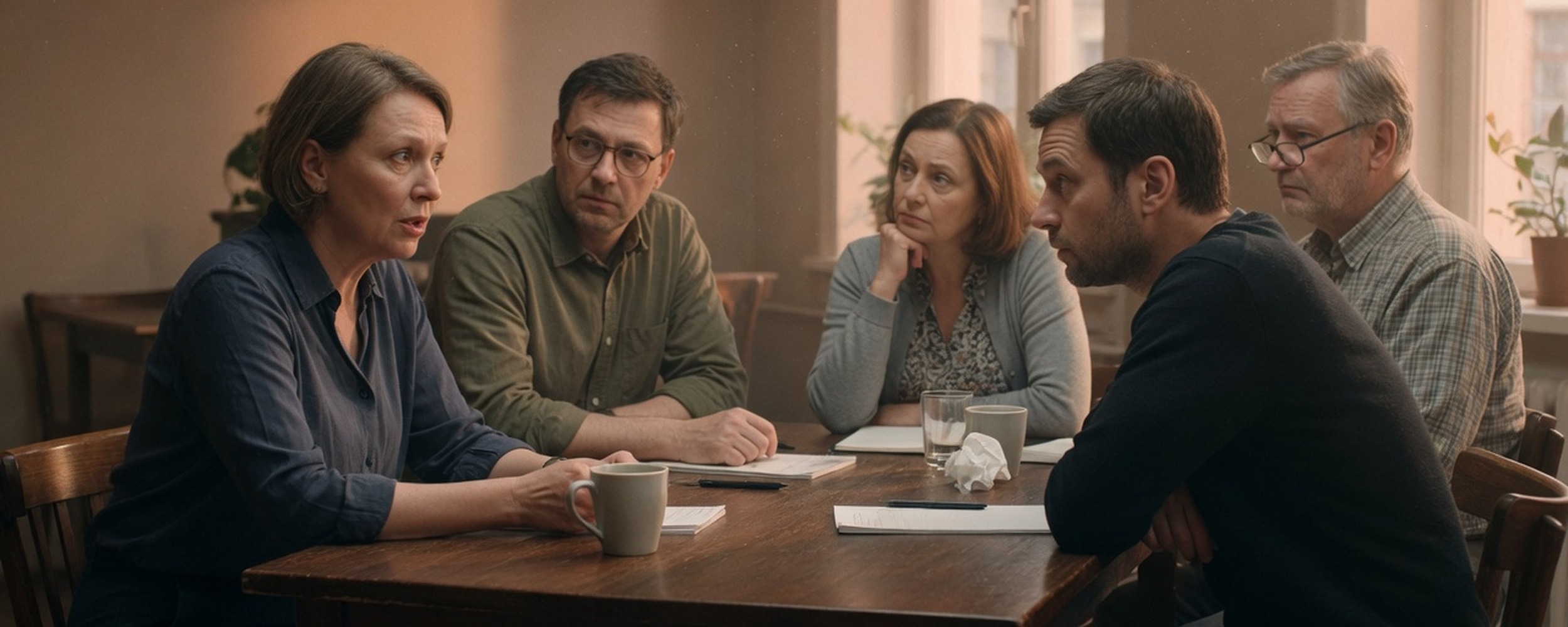
Look around the table.
Why do we look around the table before we say what we actually think?
We’re in a meeting. We have the thought. We wait to see who else is going to talk.
It feels like we’re being polite.
That’s not politeness. That’s the group picking the safe line before anyone checks if it’s true.
The stew is too salty. Nobody wants to be first.
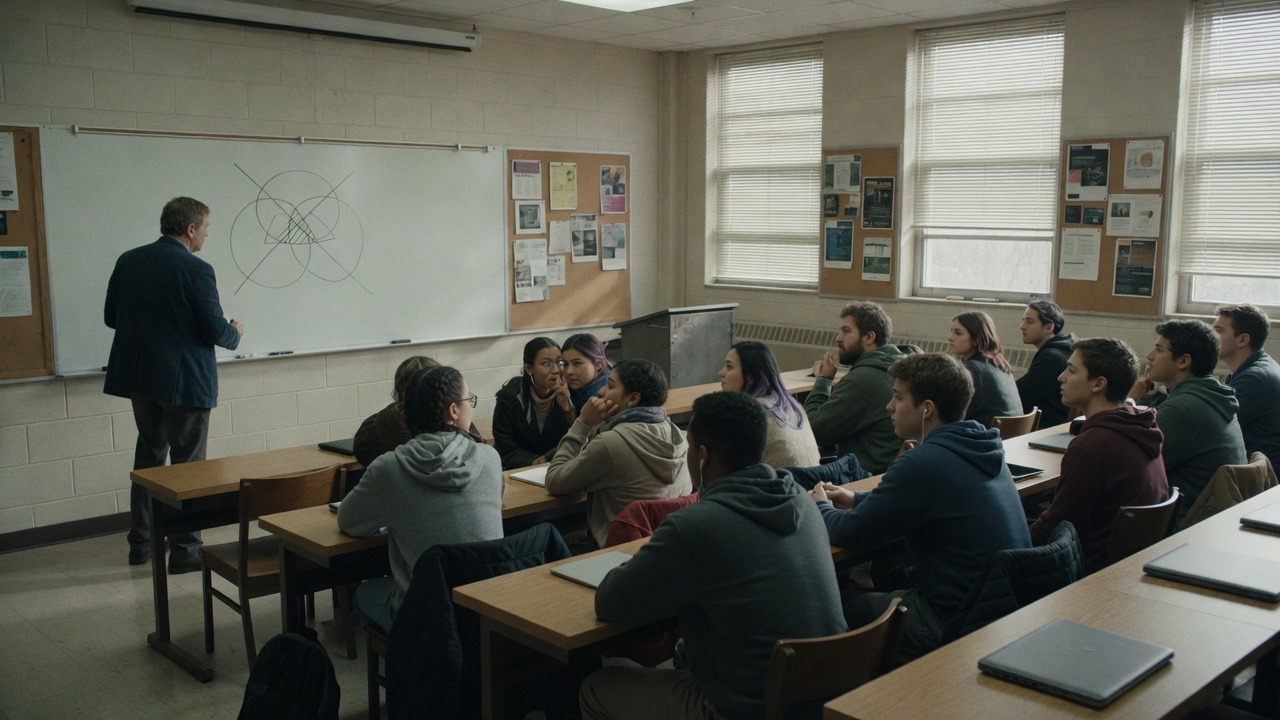
Dinner. A pot in the middle of the table. We take a bite. It’s too salty. We look up.
Everyone else is looking too. Not at the pot. At each other. A small pause that could be manners, or could be a vote. If no one says it, the pot is fine. If we say it, we are the one who made dinner awkward. So we wait for a face that will go first. The pot does not get better while we wait. The room just gets more sure that silence means the stew is good.
That is the meeting. We have the thought. We scan the faces. The scan feels like respect. What it is doing is asking the room for permission to think the thing we already think.
Each of us can think we’re the only one
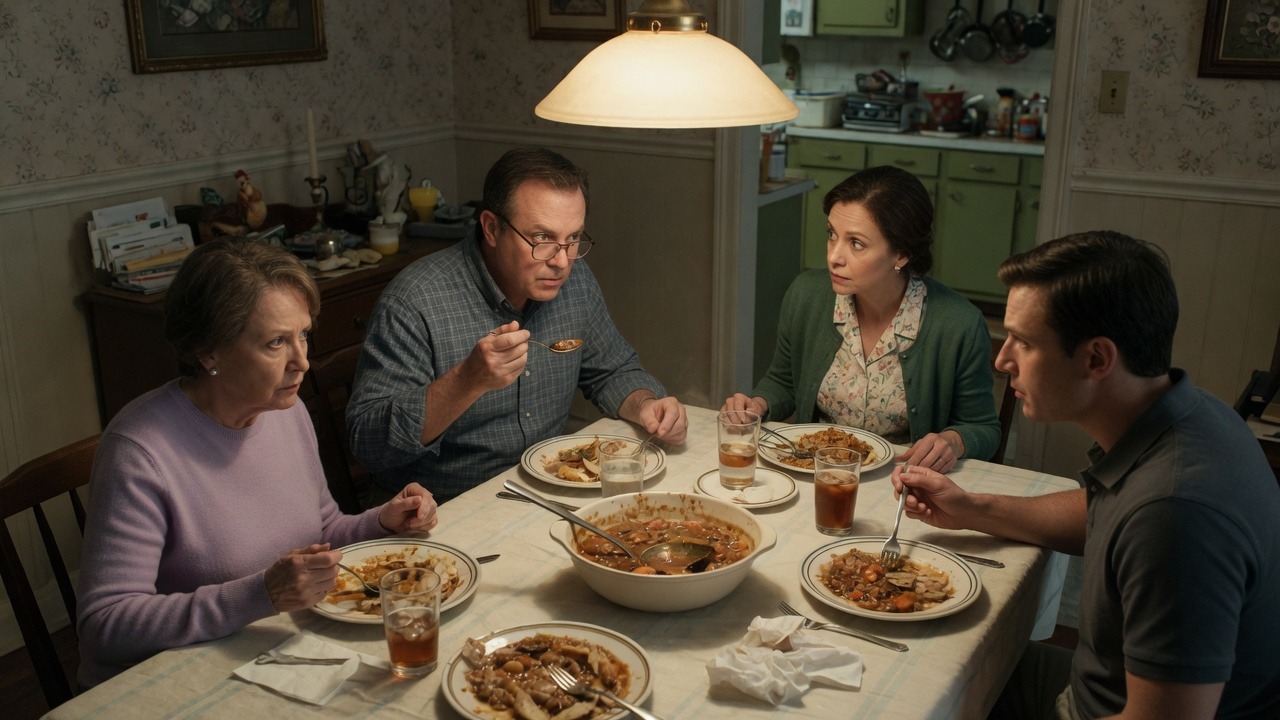
A classroom. Something on the board is off. Half the room can see it. Nobody raises a hand. Each person looks sideways, takes the silence as evidence, and sits on the thought. From the inside it feels private: I’m the only one who doesn’t get it. From the outside it is a room full of people doing the same math.
Social psychologists named that pluralistic ignorance: a group in which most people reject a view, privately, while believing that most other people accept it — so each person goes along with a “we” that almost no one is. Deborah Prentice and Dale Miller showed a clean version on a campus in 1993. Students believed their classmates were more comfortable with heavy drinking than they themselves were. The public line was warmer than the private one. People used the public line to decide what was normal.
What that study shows: we are bad at reading a room we are inside. We treat other people’s faces and silence as their real position. We treat our own hesitation as the exception.
What it does not show: that every meeting is a drinking study. That we should interrupt every pause. That the quiet person is always right. It shows the error in the scan. Looking around the table is not a reading of other minds. It is a guess that other minds are more sure than ours.
Sometimes we know what we think. We still don’t say it.
There is a second machine, and it is not confusion. It is cost.
Timur Kuran called it preference falsification: stating a preference that differs from what we actually hold, because of the social price of the real one. In his account, the lie is often a silence. We do not have to say the safe line. We only have to not say the true one. The room then uses that not-saying as more evidence that the safe line is shared.
What that book shows: public opinion can drift away from private opinion without a villain in the chair. Each person is protecting standing, belonging, the next hour. The sum of those protections is a “we” nobody would vote for in a booth.
What it does not show: that we should blow up the meeting. That every quiet is a lie. Some quiet is listening. Some is not knowing yet. The tell is the look. If we already have the thought, and we are waiting for the room to tell us whether the thought is allowed, we are not gathering information. We are asking for cover.
Solomon Asch’s line-judgment work in the 1950s is the laboratory picture of the same pressure. A person will say a shorter line is longer if the people before them said so. Asch’s 1955 account is careful: many people still told the truth. The ones who went with the room often said later they knew the answer and did not want to be the odd one. That is not a mystery. That is the stew. We can taste the salt and still wait.
What Asch does not give us is a rule that groups are always wrong. Groups are often right. The skill is not “ignore everyone.” The skill is noticing when the look around the table is doing the deciding.
Politeness is real. So is the vote we didn’t mean to cast.
There is a cheap version of courage that is just volume. That is not the move. A room full of people performing first is not a room that can think. The move is smaller: keep the thought long enough to ask whether we are holding it, or parking it until a face licenses it.
The first person who does speak often becomes the line. Not because they checked. Because they went. After that, looking around the table is looking for that line, not for the truth. If we were waiting to see “what we think,” we just found what one person was willing to risk. That can be useful. It is not a vote. It is a sample of one, treated as a census.
Waiting can be courtesy. Letting someone finish. Not talking over the person who has been talked over. That is not what this look is.
This look is: I have the line, and I am checking whether the room will punish it. If a face nods, I will say it. If the faces stay still, I will keep it. The group then picks a safe line — not because it was checked, but because it was the one nobody had to risk.
We still have a mouth. We still have a thought. The room does not have to go first for the thought to be ours.
The skill is not always speak first. First can be noise. First can be a performance. The skill is catching the moment we handed the thought to the table and asked it to hand one back.
The skill is not always speak first. The skill is: notice when we’re waiting for the room to tell us what we think.
Ask:
- Did I look around before I decided?
- Is this my thought, or the room’s?
Definitions
- Pluralistic ignorance
- A room in which most people privately reject a line, while believing that most other people accept it — so each person goes along with a “we” that almost no one is.
- Preference falsification
- Showing a preference that is not the one we actually hold, because of what the true one would cost in the room. Silence can do that work.
References
- Prentice, D. A., & Miller, D. T. (1993). Pluralistic ignorance and alcohol use on campus: Some consequences of misperceiving the social norm. Journal of Personality and Social Psychology, 64(2), 243–256. https://doi.org/10.1037/0022-3514.64.2.243
- Kuran, T. (1995). Private truths, public lies: The social consequences of preference falsification. Harvard University Press. https://www.hup.harvard.edu/books/9780674707580
- Asch, S. E. (1955). Opinions and social pressure. Scientific American, 193(5), 31–35. https://www.scientificamerican.com/article/opinions-and-social-pressure/
- Asch, S. E. (1951). Effects of group pressure upon the modification and distortion of judgments. In H. Guetzkow (Ed.), Groups, leadership and men (pp. 177–190). Carnegie Press.