The feed is farming attention, outrage, or identity.
Why did we pick up the phone to send an address and end up in a cooking video?
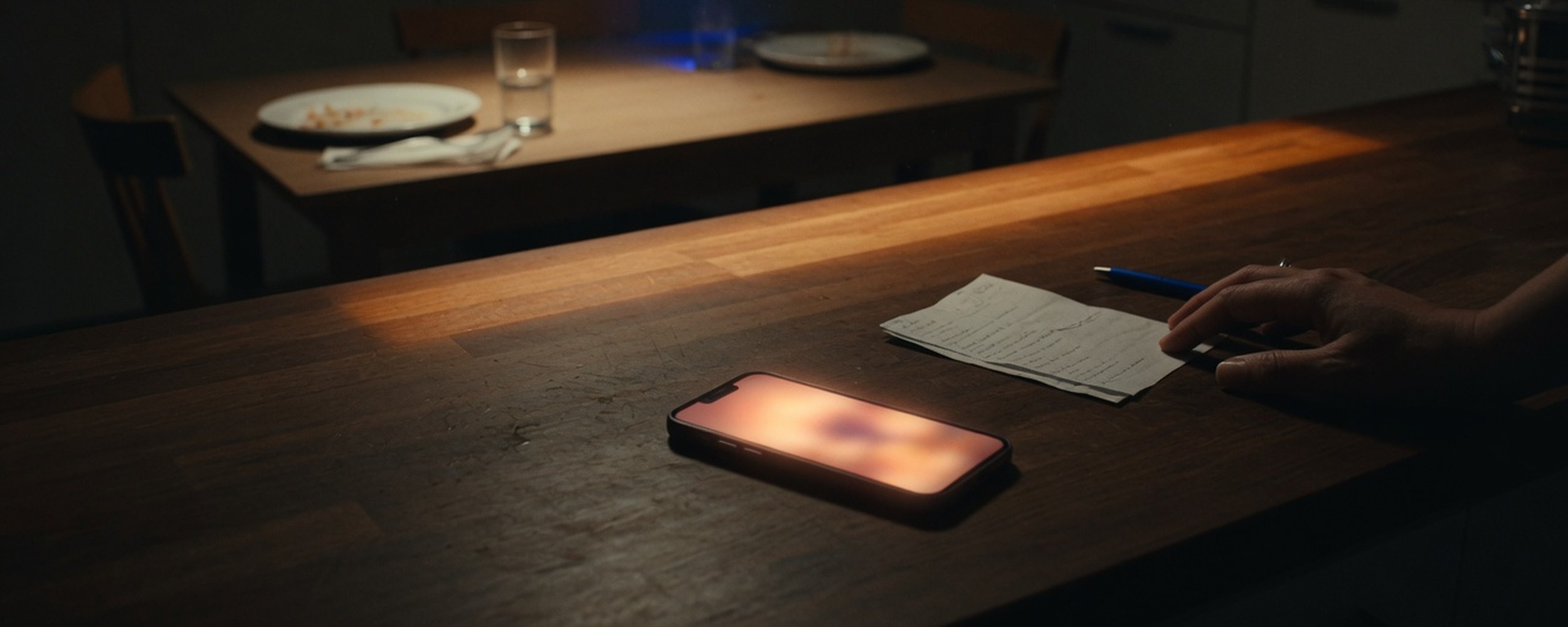
We’re in the kitchen. A family member is coming over. We need to text them the address.
We pick up the phone to send it.
A cooking video is already playing. We look up. The food is still on the counter. We never sent them the street.
They’re still waiting. They don’t have the address.
It feels like we got lazy. Like we can’t even finish one text.
That’s not us being lazy. That’s a system built to capture our attention and keep it.
That’s called attention farm. A platform puts something in front of us so we keep looking. The cooking video was there before we typed.
The errand is still there. The warm thing got the first vote.
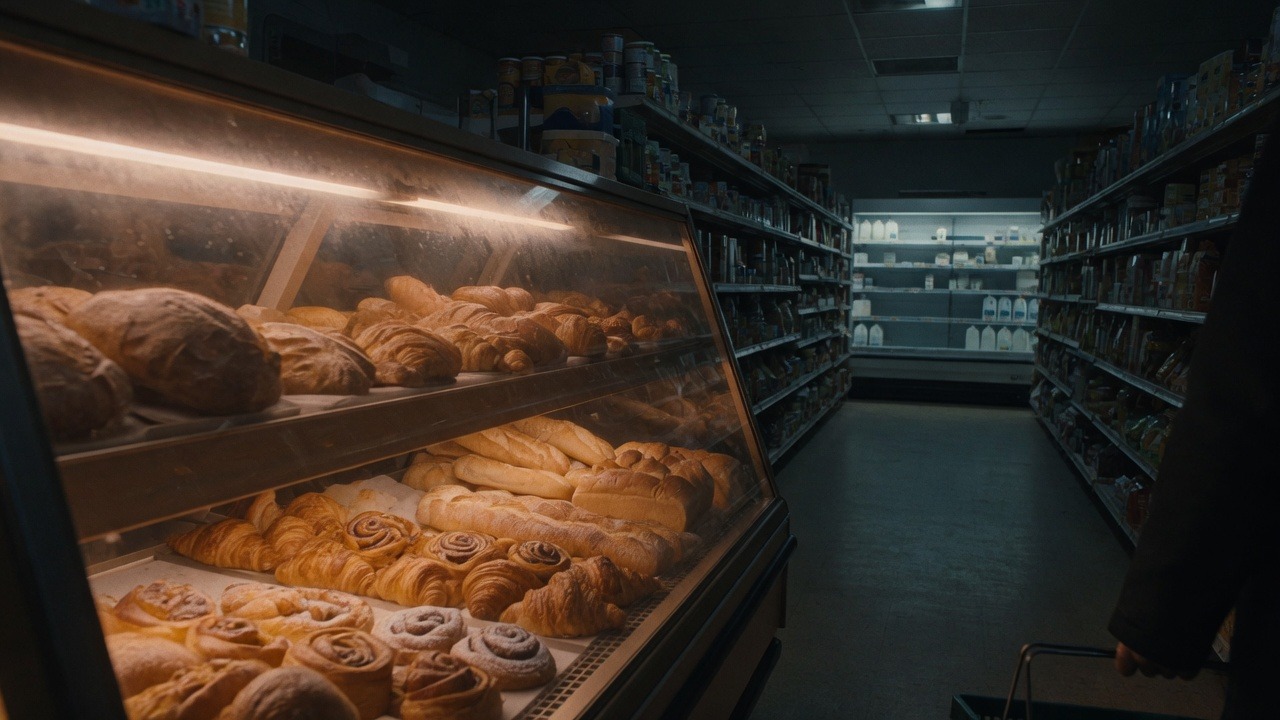
Walk into a grocery store for milk. You can still buy milk. The store did not hide it to punish you. It put the bakery under the first lights you meet. Bread, heat, sugar, glass. The milk is at the back, in a colder aisle, after you have already been asked to want something else.
Nobody has to force the pastry. The store only has to put it first. You can still do the errand. The path is built so the warm thing gets a vote before the errand does.
That is the kitchen, in a bigger room. We opened the phone to send a street. The feed put a finished, moving, glowing thing in the same hand that was supposed to type. The address was still the job. It was not the brightest object in the field.
This is not a parable about willpower. It is a picture of an environment. A store is designed. A feed is designed. Design is not a verdict on our character. It is a fact about what gets the first look.
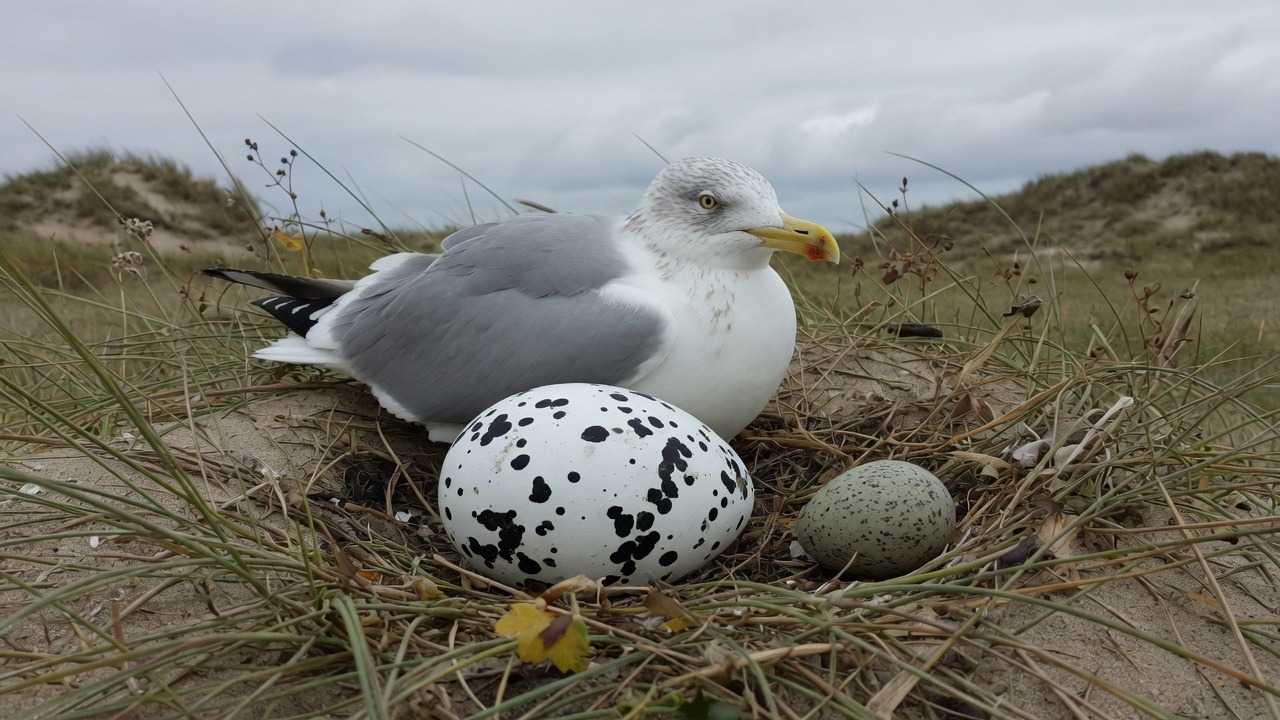
The brighter egg is not more true. It is more.
In the 1940s and 1950s, Niko Tinbergen and A. C. Perdeck tested what made herring-gull chicks beg. The chicks peck at the red patch on a parent’s bill. That is how they get fed. The researchers swapped the real parent for cardboard dummies and changed one thing at a time: color, contrast, shape, how close it was, whether it moved.
What the work showed is blunt. A chick does not need a whole parent. It needs a few exaggerated cues. A dummy with a stronger patch could pull more pecks than the real bill. Tinbergen later gathered the same kind of result across nests and courtship: a bird will sit on an egg that is larger, brighter, more contrasted than its own. He called that a supernormal stimulus — an exaggerated version of a cue the nervous system already answers, so the exaggerated version wins.
What those pages do not show is a smartphone. They do not show a cooking video. They do not prove that a product team sat down and “used Tinbergen.” They show a rule about nervous systems: when a cue is already load-bearing, a louder version of it can beat the real object sitting next to it.
The cooking video is not more true than the address. It is more. Brighter. Closer. Already moving. The blank message field is the real egg: quieter, still, waiting for us to do work. The feed does not need the address to disappear. It only needs something more vivid in the same second.
We still know the job. The job stopped running the hands.
If someone asked us, two minutes in, what we picked the phone up to do, a lot of us could still say it. Text them the address. The goal did not vanish. It stopped running the next action.
In 1996, John Duncan and colleagues named a pattern like that goal neglect: a person can understand a requirement, remember it, even say it back — and still not use it to steer what they do next. In their labs the “job” was a rule in a letter-monitoring task, not a family text. People with damage to frontal control systems showed it strongly. So did some people with no injury at all, especially when the task was new, feedback was weak, and more than one demand was in the room at once.
What that paper shows: knowing the rule is not the same as the rule running behavior. The slip can feel like the requirement “fell out of mind,” even when it is still available if someone asks.
What it does not show: that we are injured. That intelligence is the story. That a cooking video is the same as their letter task. The useful piece is the shape. The address can still be in the head. The hands can still be on the video. That is not amnesia. That is a goal that lost the next second to a louder cue.
The grocery store does this with space. The feed does it with time. Milk at the back is a walk. A cooking video in the same thumb is a steal of the second we meant to type.
Attention is the scarce thing. The feed spends it.
In 1971, before any of these apps existed, Herbert Simon wrote that a wealth of information creates a poverty of attention. Information consumes the attention of whoever receives it. When information is cheap and everywhere, attention is the bottleneck. Someone has to allocate it.
What Simon was actually talking about: organizations. Firms. Agencies. How to design a system that listens and condenses so the rest of the room is not drowned. He was not writing a review of a social feed. He did not measure outrage, or identity, or a cooking video in a kitchen.
What the line still gets right is the scarcity. A platform that lives on our looking has to win the next look. Ranking is how it allocates the scarce thing. The item that is most likely to hold us gets the front of the aisle. That can be a recipe. It can be a fight in the comments. It can be a face we already think of as “us.” Attention, outrage, identity — three crops, one farm. The ranking does not need us to name which crop it is taking. It needs us to keep producing the behavior it is built to harvest: time, returns, another flick.
Seeing that is not the same as being helpless inside it. Simon’s point cuts both ways. If attention is what gets spent, we can still notice the spend.
Sometimes the next one pays. That is enough.
Why doesn’t the cooking video have to be good every time?
Because an unpredictable payoff keeps a behavior going longer than a payoff that arrives on every try. C. B. Ferster and B. F. Skinner mapped that in the 1950s as a change in rate. When a reward comes after a varying number of responses — not every peck, not every tenth, but an average around some unknown number — the organism keeps sampling. In those records, that pattern is high and steady. It also dies slow when the payoff later stops.
What those pages show: the schedule matters. Unpredictability is not a mood. It is a design of when the hit arrives. Slot machines are the everyday picture the same literature has used for decades. Most pulls pay nothing. One pays. The next pull might.
What they do not show: a product memo. A pigeon is not a person in a kitchen. A food pellet is not a cooking video. We do not need a cartoon of a lab inside a company. We need the felt match. Sometimes the next clip is funny, flattering, or enraging. Sometimes it is nothing. The number of flicks between those hits is not fixed. That is enough to keep the thumb asking.
A feed that is only occasionally worth it is harder to leave than a feed that is always the same. That is not a moral. It is what those schedules do to rate.
We still opened it. We still stayed.
None of this is a pass.
The store put the bakery first. We can still walk to the milk. The dummy egg is louder than the real one. The bird is still the one sitting. The feed put a moving picture in the second we meant to type. We still opened the phone. We still stayed.
A platform is built to take the time we meant to send the address. That does not mean we have to give it.
The useful question is not “Why am I like this?” as a verdict. It is “What just got the next minute?” If we cannot name the errand, we are already in the aisle. If we can name it, we have a way to notice when the ranking took us off it.
Afterward, a second question is diagnostic, not a scolding. Attention, outrage, identity — or the original task. Those are different harvests. Only one of them was ours.
If the minutes went to a crop we did not plant, that is information about the room. It is not a private failure we have to hide. The feed will still be there tomorrow. So will the errand, if we can still see it.
The skill is not never open the phone. The skill is noticing when the feed is picking the next minute for us.
Before we open the phone, say it: text them the address.
Ask:
- What did we pick the phone up to do?
- Did we do it?
Definitions
- Supernormal stimulus
- An exaggerated version of a cue the nervous system already answers, so the exaggerated version wins over the real thing sitting next to it.
- Goal neglect
- Keeping a goal in mind — even being able to say it back — while letting it drop out of the next action.
References
- Tinbergen, N., & Perdeck, A. C. (1950/1951). On the stimulus situation releasing the begging response in the newly hatched herring gull chick. Behaviour, 3, 1–39. https://doi.org/10.1163/156853951X00197 · publisher page
- Tinbergen, N. (1951). The study of instinct. Oxford: Clarendon Press. https://archive.org/details/studyofinstinct0000tinb
- Duncan, J., Emslie, H., Williams, P., Johnson, R., & Freer, C. (1996). Intelligence and the frontal lobe: The organization of goal-directed behavior. Cognitive Psychology, 30(3), 257–303. https://doi.org/10.1006/cogp.1996.0008
- Simon, H. A. (1971). Designing organizations for an information-rich world. In M. Greenberger (Ed.), Computers, communications, and the public interest (pp. 37–72). Baltimore: Johns Hopkins Press. https://gwern.net/doc/design/1971-simon.pdf
- Ferster, C. B., & Skinner, B. F. (1957). Schedules of reinforcement. New York: Appleton-Century-Crofts. https://www.bfskinner.org/product/schedules-of-reinforcement-pdf/