How stories and tradition hold
Keep the standing. Ask what the steps are doing
When everyone already knows when to stand, what is that practice actually doing?
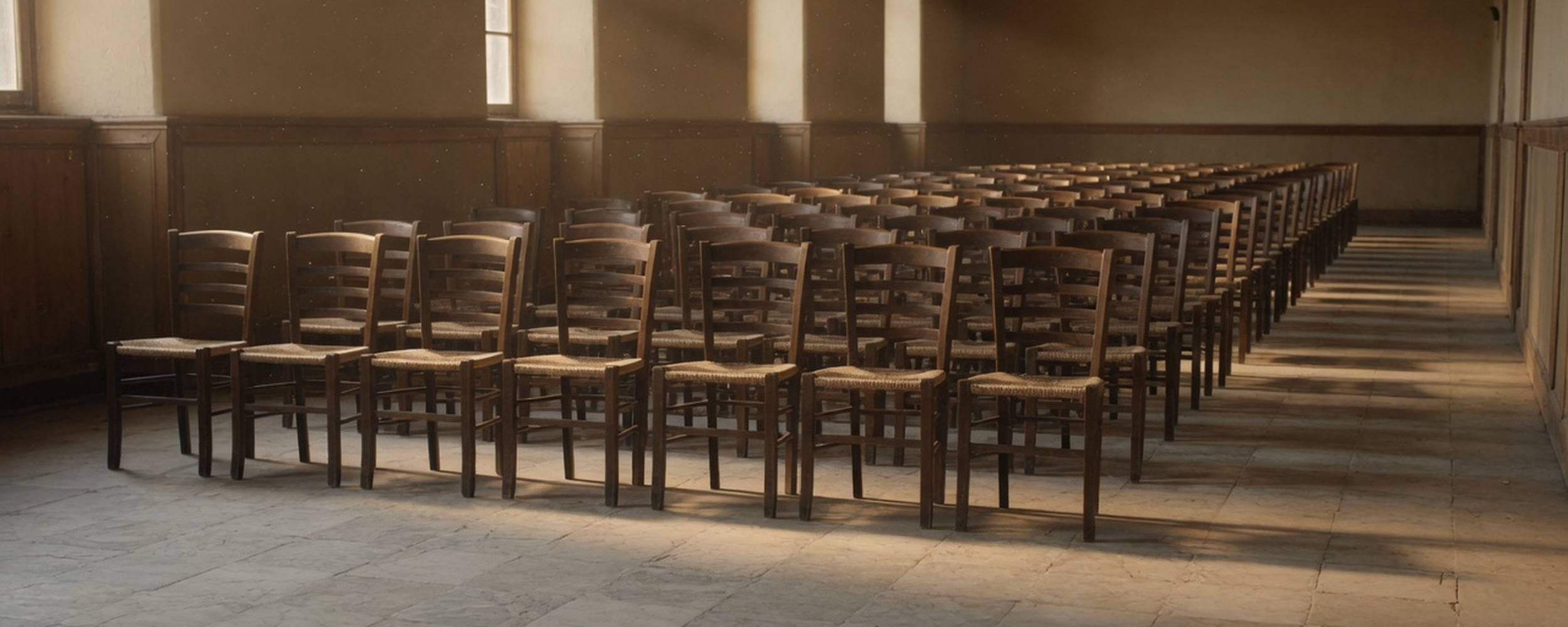
A room rises at the same moment. Chairs scrape. Coats settle. The sequence is already in the body. That smoothness can feel like a verdict — as if the steps themselves have been checked. They have not. They have been practiced. Practice is a real job. It is not the same job as testing a claim about the world.
We can keep the standing. We do not have to let the ease of the steps finish an argument they were not hired for.
Ritual is how a room moves together
A ritual, in the ordinary scholarly sense, is a predefined sequence of actions. It is rigid. It is formal. It repeats. It sits inside a system of meaning the people in the room already share. That is what separates it from brushing your teeth because your mouth needs it, or lining up because the door is narrow. Habits are automatic and mostly private. Routines are sequences pointed at a practical goal. Rituals often have little immediate utility. They still do work. They send a social signal. They tell the room, without a speech, that we are in the same event.
The signal is not a small thing. Shared, repeated sequences help a group regulate feeling, hold together under stress, and move as one body. That is coordination. Secular rooms use it as readily as sacred ones: a pre-game routine, a diplomatic protocol, a standing ovation that starts because the first two rows stood. The point is not magic. The point is that a rigid sequence is a cheap way to get dozens of nervous systems onto the same clock.
One feature of these sequences is causal opacity. The steps do not have a direct, visible causal link to the outcome they seem to aim at. We stand, and then we sit, and the meeting continues. The standing did not make the next sentence true. It made the room one room. That is a different kind of success.
Political and civic life uses the same tool. Processions, oaths, public displays — these are not decorations on top of power. They are one of the ways a hierarchy gets into the body. Everyone already knowing when to stand is how a room rehearses who leads the timing.
Familiar steps get loud without getting checked
Once a sequence is in a room, it does not stay a one-off. Structural ritualization theory, developed by J. David Knottnerus, treats these everyday sequences as ritualized symbolic practices. They are not extras. They help form and reproduce the structure of the group that keeps doing them.
Four factors decide how much weight a practice carries: how noticeable it is (salience), how often it runs (repetitiveness), how much it matches the other practices around it (homologousness), and whether the room has the means to keep doing it (resources). High scores on those four do not mean the practice has been tested. They mean it has been embedded. Embedded practices get into cognitive scripts. People keep doing them even when nobody is handing out a prize, and even when the wider world is not asking for them.
That is why a standing we have done since childhood can out-compete a new question asked this morning. The standing is salient. It is repetitive. It matches the other steps in the hour. The room is built to resource it — chairs, timing, a person at the front, a shared look. None of those four factors is a check of a claim. They are a description of intensity.
There is a cousin in how the mind feels about ease. Processing fluency is the subjective sense that something ran through without friction. It is a cue about the work the mind just did, not a verdict on the world. Repetition and prior exposure make meaning easier to extract. Easy processing then gets read as familiar, simple, or valid. A sequence we can perform with our eyes closed will feel true in a way a new sentence will not. Fluency does not know whether the steps were hired to coordinate a room or to settle a fact. It only knows the path is worn.
The job is not the same as the feeling
We get into trouble when those jobs are stacked without a seam. The steps that taught us how to be in a room together are later asked to settle whether a sentence about the world is so. The old sequence is fluent. The new question is not. Fluency feels like home. Home feels like truth.
None of this says the practice is empty. Belonging is a real need. A room that can stand together is a room that can also sit through hard news, or wait, or begin. Those are human goods. The mistake is to treat the goods as a checked claim. A claim about the world — what happened, who decided, what follows — has to stand when the warmth of the sequence is taken off it.
We do not have to make a scene. We do not have to stop standing. We have to stop asking the standing to do work it was not hired for. A lesson can stay a lesson. A courtesy can stay a courtesy. A coordinated room can stay a coordinated room. The sentence that is doing different work is the one that could, in principle, be otherwise.
Ask what job the steps are doing
The useful question is not “Do I still want this practice?” That will often say yes. The useful question is smaller.
Keep the standing if you want. Ask what job the steps are doing.
If the job is coordination — getting a room onto the same clock, lowering the temperature, showing we are in this together — the steps can keep doing that job. If the job is being treated as evidence, we have asked them for something they cannot give. Intensity is not a check. Fluency is not a check. The four factors that make a practice loud are a map of how it got into the furniture. They are not a map of the world outside the door.
We can rise with the room and still notice that the rising did not test the next sentence.