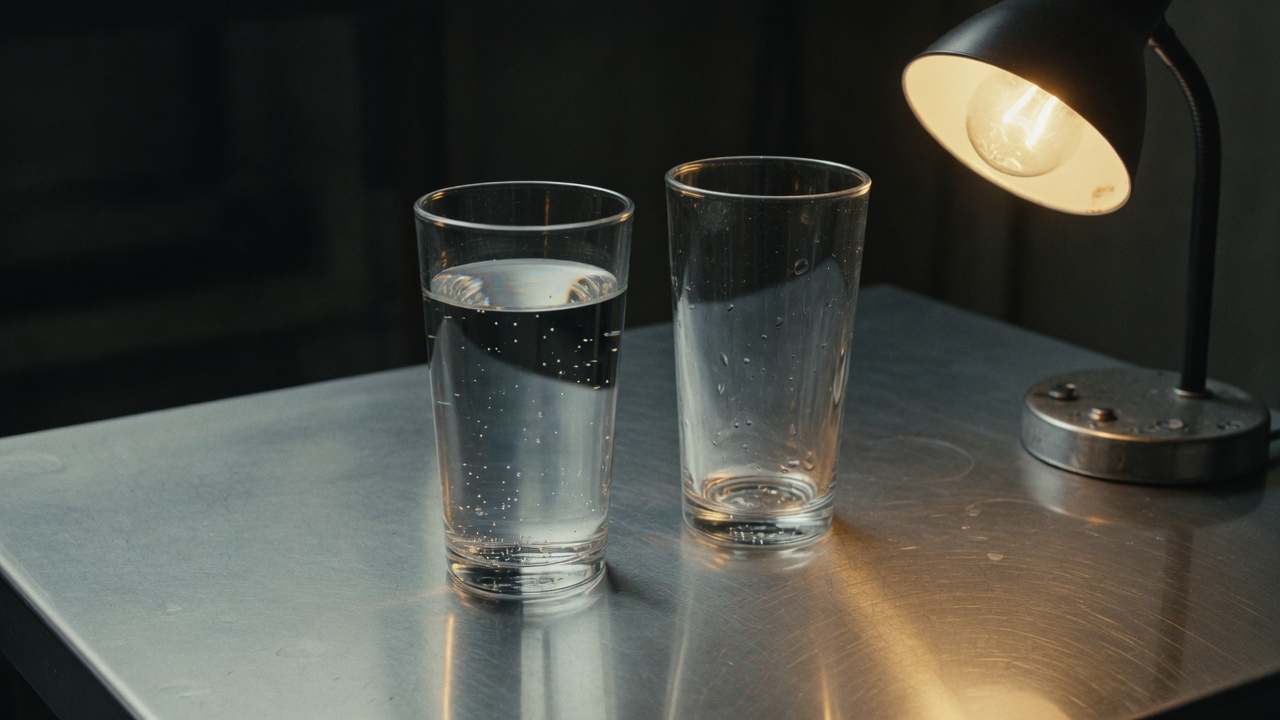
Why does the same meal stop being wanted after you have eaten it?
A drive to eat falls as the need is reduced and homeostasis is approached (Myers & DeWall, 2021; Spielman et al., 2020). Motivation is the name for processes that start, steer, and sustain behavior. The empty glass and the full glass in the title still are the operational picture of that change: the same object, two states of need. An incentive is a pull from outside — the meal can still look good after you are full, and still not be eaten.
Does Maslow’s ladder explain that change?
The hierarchy of needs is in every intro text. As a strict ladder it is weakly evidenced: people skip rungs; “self-actualization” is hard to operationalize. Figure 15.1 separates drive, incentive, and the hierarchy so a later paper that says “participants were motivated” can be asked which of those the procedure actually specified.
| Account | What starts or stops the behavior |
|---|---|
| drive / homeostasis | An internal need pushes; reducing the need lowers the drive |
| incentive | An external stimulus pulls, even when the drive is low |
| hierarchy of needs | Lower needs are said to dominate until they are met; treat as a theory under test |
Check yourself with a quick quiz
A few questions on this lesson only. Questions you miss come back later. Progress stays in this browser and is shared with the full quiz.
References
- Myers, D. G., & DeWall, C. N. (2021). Psychology (13th ed.). Worth.
- Spielman, R. M., Jenkins, W. J., & Lovett, M. D. (2020). Psychology 2e. OpenStax.
Image and media credits
- Top image. Two glasses of water on a table under a lamp. It sets the scene for this lesson on motivation. Source: Created for this site with Grok Imagine (xAI), an AI image generator. License: Original image made for mattgaugerx.com.
