Why can two people receive the same retinal image and not see the same object?
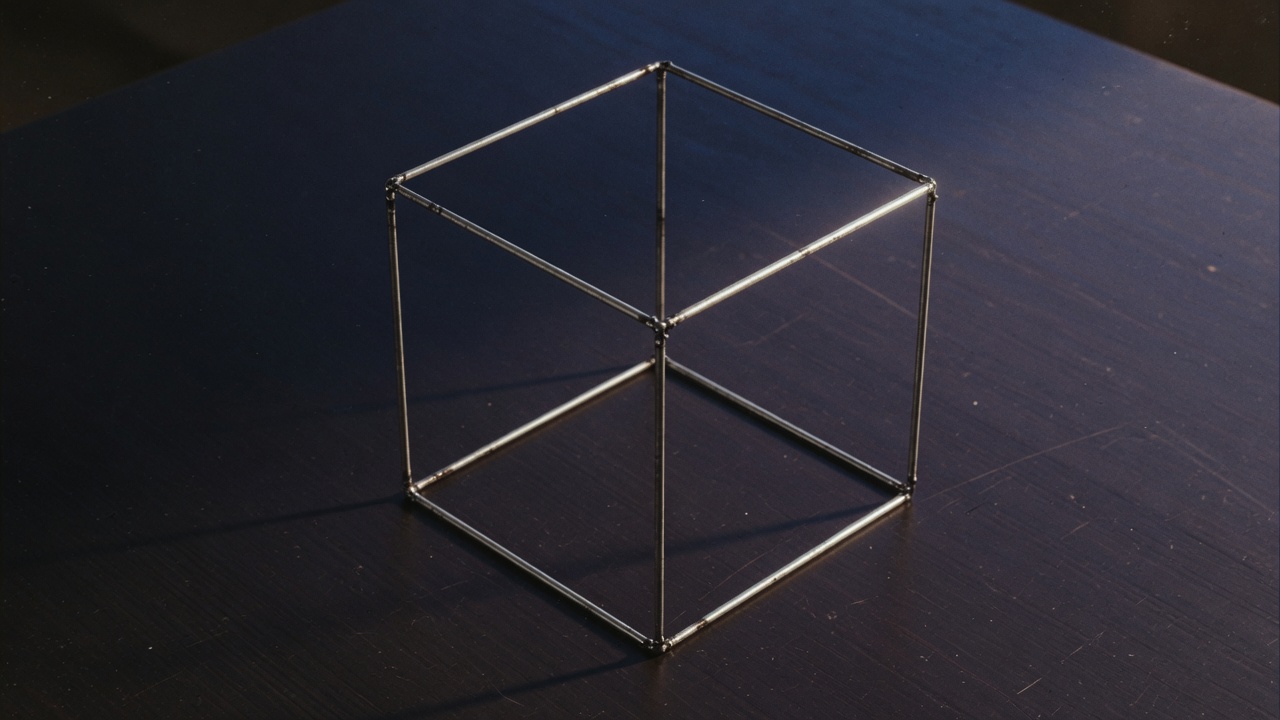
Because perception organizes sensation. Bottom-up processing starts from the current sensory data. Top-down processing uses knowledge and expectation (Myers & DeWall, 2021; Spielman et al., 2020). A wire cube can be seen in two orientations because the data underdetermine the 3-D layout. The next article on thinking will treat a related problem: the same evidence underdetermining a judgment.
What does a Gestalt grouping principle actually do in a scene?
It specifies how elements are packed into objects: proximity, similarity, closure, continuity. A depth cue specifies distance. Figure 10.1 separates bottom-up from top-down so a paper that says “the participants saw X” can be asked which of those did the work.
| Contribution | What it uses | In the wire-cube case |
|---|---|---|
| bottom-up | The current retinal image | Lines and junctions on the retina |
| top-down | Knowledge and expectation | Which face of the cube is treated as near |
Check yourself with a quick quiz
A few questions on this lesson only. Questions you miss come back later. Progress stays in this browser and is shared with the full quiz.
References
- Myers, D. G., & DeWall, C. N. (2021). Psychology (13th ed.). Worth.
- Spielman, R. M., Jenkins, W. J., & Lovett, M. D. (2020). Psychology 2e. OpenStax.
Image and media credits
- Top image. A wire-frame cube on a dark table. It sets the scene for this lesson on perception. Source: Created for this site with Grok Imagine (xAI), an AI image generator. License: Original image made for mattgaugerx.com.
