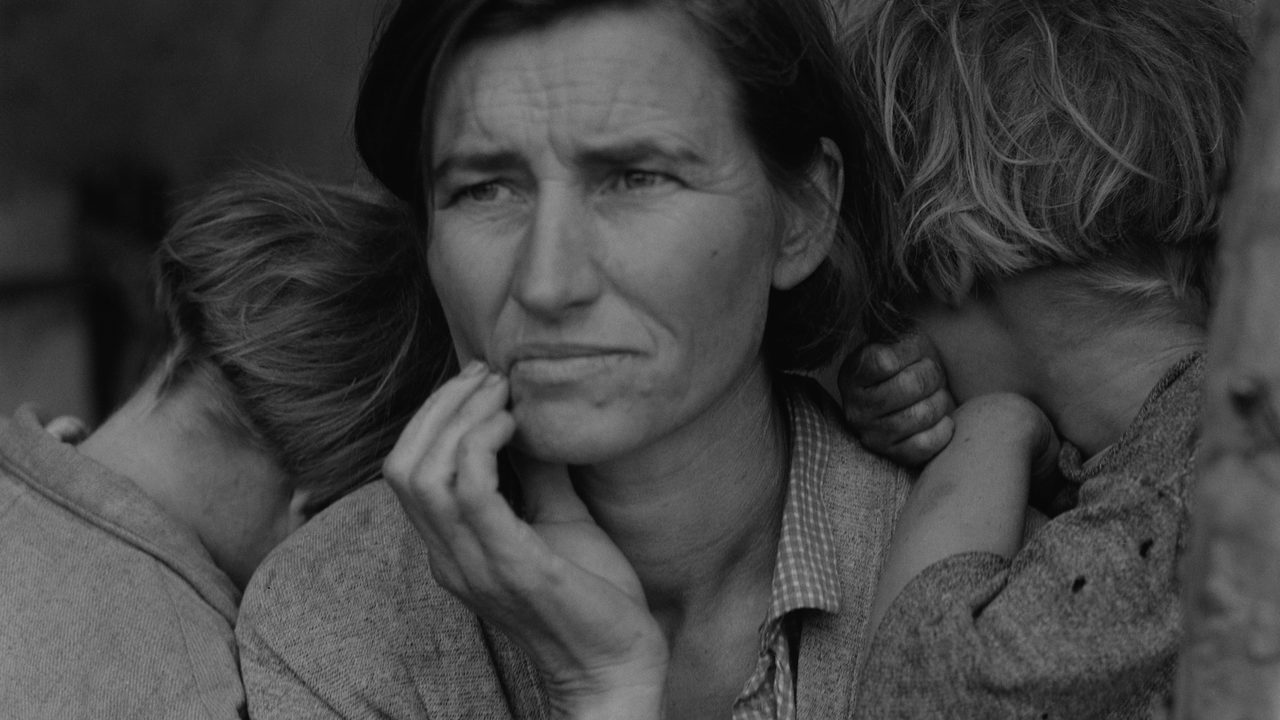
If you lost your job tomorrow, whose problem would that be: yours, the economy's, or both?
Most people answer "mine" first. Losing a job feels personal, because it is personal: the rent is still due, and the worry keeps you up at night. asks a second question that most people skip. How many other people lost their jobs the same month, and what were those people caught up in together? Sociology is the systematic study of society and social interaction: the groups people belong to, the patterns those groups follow, and the way those patterns shape individual lives (Conerly et al., 2021).
This first lesson gives you three tools. The first is a habit of mind, the sociological imagination. The second is a short history: the six thinkers who built the field. The third is a set of three lenses that sociologists still use to look at almost anything.
In one minute
- Sociology studies groups, patterns, and the structures that shape individual lives.
- C. Wright Mills (1959) called the key habit the sociological imagination: seeing how a personal trouble connects to a public issue.
- Sociology grew out of the upheaval of revolution, factories, and crowded cities in the 1800s.
- Six founders: Comte, Martineau, Marx, Durkheim, Weber, and Du Bois.
- Three lenses: functionalism, conflict theory, and symbolic interactionism.
The field
If psychology already studies people, what is left for sociology to study?
The groups people live inside. Psychology mostly asks what goes on within one person: perception, memory, emotion. Social psychology asks how other people and situations change what that one person thinks and does. Sociology steps back further and studies the groups themselves: families, congregations, schools, companies, cities, and whole nations (Conerly et al., 2021).
Two words come up constantly. A is a group of people who live in a defined territory and share a culture. A is that group's shared beliefs, values, practices, and objects. Lesson 3 takes up culture in depth.
Sociologists also work at two scales. sociology studies small groups and face-to-face interaction, such as a conversation or a family dinner. sociology studies large structures, such as an economy or a system of government. Figure 1.1 lines the scales up from small to large.
Scroll sideways to see the whole figure.
The imagination
How can one person's bad year tell you something about a whole society?
The American sociologist C. Wright Mills answered that question in his 1959 book The Sociological Imagination. He argued that ordinary people often feel trapped by forces they cannot see. They experience those forces one life at a time, so they read them as private failures. Mills called the habit of connecting the two the : the ability to see how an individual life (biography) and the history of a society shape each other (Mills, 1959).
"Neither the life of an individual nor the history of a society can be understood without understanding both." C. Wright Mills, The Sociological Imagination (1959), chapter 1
Mills drew a line between two kinds of problems:
- A is a problem located in one person's character and immediate relationships. The explanation and the remedy lie mostly within that person's own life.
- A is a problem that goes beyond any one person's life. The explanation lies in the structure of the society: its economy, its institutions, its history.
His most famous example is unemployment. In a city of 100,000, if only one man is out of work, that is his personal trouble, and it makes sense to look at his skills and his choices. In a nation of 50 million workers, if 15 million are out of work, that is a public issue. No amount of individual effort explains why 15 million people lost work at once; the answer lies in the economy (Mills, 1959). Figure 1.2 draws that contrast.
Scroll sideways to see the whole figure.
The sociological imagination does not erase personal responsibility. The one unemployed person in Mills's small city may well need to change something. The tool simply asks you to check the pattern before you settle on an explanation. Mills also applied the idea to marriage and divorce: one couple's divorce is a personal trouble, but when a large share of marriages in a country end in divorce, the institution of marriage and the forces pressing on it become a public issue (Mills, 1959).
Try it: two minutes
Pick one hard thing from your own life or a friend's: student debt, a long commute, loneliness, a medical bill. Ask two questions. First, what part of this sits inside one person's choices? Second, how many other people face the same thing, and what do they share? If the second answer is "millions, and they share the same economy or the same laws," you have found a public issue hiding inside a personal trouble.
Where it began
Why did sociology appear in the 1800s and not earlier?
Because society suddenly stopped looking permanent. People had always thought about community and power. But in the late 1700s and the 1800s, two revolutions shook Europe at the same time. The French Revolution of 1789 overturned a monarchy and an aristocracy that had seemed fixed for centuries. The Industrial Revolution pulled millions of people off farms and into factories and crowded cities, where they lived among strangers, worked by the clock, and faced new kinds of poverty (Conerly et al., 2021).
When the social world changes that fast, people start asking how it holds together at all. The first sociologists hoped that the careful methods of the natural sciences could answer that question. Figure 1.3 places the six founders on one timeline.
Scroll sideways to see the whole figure.
The founders
Who built sociology, and what did each one notice that others missed?
Auguste Comte (1798-1857): a science of society
The French thinker Auguste Comte gave the field its name and its first program. He argued for , the view that society should be studied with the same observation and reasoning used in physics or biology, and that such knowledge could be used to improve society (Conerly et al., 2021).
Harriet Martineau (1802-1876): how to observe
The English writer Harriet Martineau is often called the first woman sociologist. After traveling across the United States from 1834 to 1836, she published Society in America (1837), which criticized slavery and the limited rights of women. Her How to Observe Morals and Manners (1838) is one of the earliest books on sociological method, and in 1853 she translated and condensed Comte's major work into English (Conerly et al., 2021).
Karl Marx (1818-1883): class and conflict
The German philosopher and economist Karl Marx did not call himself a sociologist, but his ideas shaped the field. He argued that history is driven by conflict between classes. In industrial capitalism, he wrote, the , who own the factories and other means of production, profit from the labor of the , who own only their ability to work. With Friedrich Engels he wrote The Communist Manifesto (1848); the first volume of Capital followed in 1867. The workers' revolutions Marx predicted for industrial nations did not unfold as he expected, and twentieth-century governments that claimed his name imprisoned and killed millions of people. Sociologists still use his central question, who benefits, without adopting his politics.
Emile Durkheim (1858-1917): social facts
The French sociologist Emile Durkheim helped make sociology a university discipline. He insisted that society is real in its own right: laws, customs, and shared beliefs are that exist outside any one person and constrain how people act. His study Suicide (1897) chose the most private act imaginable and showed that its rates varied in steady patterns between groups. Groups whose members were less tightly bound together, such as unmarried people compared with married people, and Protestants compared with Catholics in his data, had higher rates. Durkheim concluded that , how strongly people are tied into groups, shapes even the most personal choices (Durkheim, 1897/1951).
Max Weber (1864-1920): meaning and bureaucracy
The German sociologist Max Weber (pronounced VAY-ber) argued that sociologists must also understand what actions mean to the people doing them. He called that interpretive understanding . In The Protestant Ethic and the Spirit of Capitalism (1904-1905), he proposed that religious beliefs, especially Calvinist ideas about work as a calling, helped produce the disciplined habits of modern capitalism. Weber also traced , the spread of efficiency, rules, and calculation into more and more of life, which he saw most clearly in bureaucracy (Weber, 1905/2002).
W. E. B. Du Bois (1868-1963): data against prejudice
The American sociologist W. E. B. Du Bois was the first African American to earn a PhD from Harvard, in 1895. For The Philadelphia Negro (1899), he went door to door through the city's Seventh Ward, surveying thousands of residents, and he used the data to show that the problems blamed on Black residents grew out of discrimination, poor housing, and blocked opportunity. At Atlanta University he led years of empirical studies of Black life. In The Souls of Black Folk (1903) he described , the experience of always seeing oneself through the eyes of a society that looks down on you. The historian of sociology Aldon Morris (2015) argues that Du Bois built the first scientific school of sociology in the United States, though the field ignored him for decades.
| Founder | Big idea | Landmark work |
|---|---|---|
| Auguste Comte | Positivism: study society scientifically | Course in Positive Philosophy (1830-1842) |
| Harriet Martineau | Systematic observation of a whole society | Society in America (1837) |
| Karl Marx | Class conflict drives social change | The Communist Manifesto (1848) |
| Emile Durkheim | Social facts; social integration | Suicide (1897) |
| Max Weber | Verstehen; rationalization | The Protestant Ethic (1904-1905) |
| W. E. B. Du Bois | Race, data, and double consciousness | The Philadelphia Negro (1899) |
Three lenses
Can three sociologists look at the same event and all be right?
Yes, because each one is asking a different question. A is a set of assumptions that tells a researcher which questions to ask and which facts to notice. Sociology has three classic perspectives (Conerly et al., 2021):
- sees society as a system of parts that work together, like the organs of a body. It asks what each part does to keep the whole stable. Robert Merton (1949) added that a social pattern has , the intended and recognized results, and , the unintended ones.
- sees society as an arena of competition over scarce resources such as money, power, and prestige. It asks who benefits from an arrangement and who pays. It grows from Marx and includes later work on race and gender.
- sees society as built from everyday interaction. People act toward things based on the meanings those things hold for them, and those meanings are created and changed in interaction. It grows from George Herbert Mead; Herbert Blumer coined the name in 1937 and set out its principles in a 1969 book (Blumer, 1969).
Figure 1.5 runs all three lenses over one familiar scene: a high school graduation. Choose a lens to see what it notices.
Functionalism
Asks: what does this do for society?
Manifest function: the ceremony certifies that students finished a course of study and sends them on to work, training, or college.
Latent functions: schooling builds friendships and networks, and it keeps young people out of the full-time labor market for years.
Roots: Durkheim; later Talcott Parsons and Robert Merton.
Conflict theory
Asks: who benefits, and who is left out?
In the United States, public schools are funded partly by local property taxes, so schools in wealthier areas often start with more resources.
A diploma is a credential. Students who began with advantages are more likely to earn it, so the ceremony can pass advantage from one generation to the next.
Roots: Marx; later Du Bois, Mills, and feminist sociologists.
Symbolic interactionism
Asks: what do the symbols mean to the people there?
A cap and gown, a tassel moved from one side to the other, and a name read aloud mean nothing in themselves. People give them the meaning of a finished stage of life.
The same moment can mean something different to a first-generation graduate whose family has never seen it before.
Roots: George Herbert Mead; later Herbert Blumer and Erving Goffman.
| Perspective | Level | Society is | A fair criticism |
|---|---|---|---|
| Functionalism | Macro | A system of parts that keep the whole stable | Can make unfair arrangements look necessary, and has trouble explaining change |
| Conflict theory | Macro | A contest over scarce resources | Can overlook cooperation and the things that hold people together |
| Symbolic interactionism | Micro | People creating meaning in everyday interaction | Can miss the large structures that limit people's choices |
Two more ideas round out the lenses. The sociologists W. I. Thomas and Dorothy Swaine Thomas observed that "if men define situations as real, they are real in their consequences" (Thomas & Thomas, 1928, p. 572). That sentence, now called the , is a core insight of symbolic interactionism: a rumor that a bank will fail can make people withdraw their money and cause the failure. And Erving Goffman, in The Presentation of Self in Everyday Life (1959), compared social life to a stage on which people perform roles for each other, an approach called .
Skills to keep
What can you do differently after this lesson?
Four habits carry through the rest of the course:
- Check the pattern before you judge the person. Ask how many others share the same problem.
- Hold both sides. Structures shape choices, and people still make choices. Mills asked for both biography and history, not one instead of the other.
- Switch lenses on purpose. Ask what something does, who benefits, and what it means to the people involved.
- Separate describing from deciding. Sociology describes how groups shape beliefs and behavior. Its methods cannot, by themselves, settle whether a belief is true or a practice is right. Lesson 14 studies religion in exactly that spirit: with respect for believers and with honest data.
Check yourself
Check yourself
Define sociology in one sentence.
The systematic study of society and social interaction: groups, their patterns, and how those patterns shape individual lives.
What is the difference between a personal trouble and a public issue?
A personal trouble is located in one person's character and immediate relationships. A public issue goes beyond any one life and is explained by the structure of the society, such as its economy or institutions.
In Mills's example, what turns unemployment from a trouble into an issue?
Scale and pattern: one person out of work in a city of 100,000 is a trouble; 15 million out of 50 million workers is an issue rooted in the economy.
Name two changes in the 1700s and 1800s that pushed people to create sociology.
The French Revolution and the Industrial Revolution, with the rapid growth of crowded cities.
What did Durkheim's Suicide show?
That suicide rates varied in steady patterns between groups, and that groups with weaker social integration had higher rates: even a private act has social causes.
What does Weber's term Verstehen mean?
Interpretive understanding: grasping what an action means to the people doing it.
Why is Du Bois's The Philadelphia Negro important?
It was one of the first large empirical community studies in American sociology. Du Bois used door-to-door survey data to show that problems blamed on Black residents grew out of discrimination and blocked opportunity.
A school dance builds friendships no one planned. Which perspective, and which term?
Functionalism; a latent function, an unintended result of a social pattern.
Which perspective works mostly at the micro level?
Symbolic interactionism.
Flashcards
Tap a card to flip it. Say the answer out loud before you tap.
Sociological imaginationTap to flip
Seeing how a person's life and the history of a society shape each other (Mills, 1959).
Personal troubleTap to flip
A problem rooted in one person's character and immediate relationships.
Public issueTap to flip
A problem rooted in the structure of a society; it reaches beyond any one life.
PositivismTap to flip
Comte's view that society should be studied with scientific observation.
Social factTap to flip
Durkheim: a law, custom, or belief that exists outside any one person and shapes behavior.
VerstehenTap to flip
Weber: understanding what an action means to the person doing it.
Double consciousnessTap to flip
Du Bois: always seeing yourself through the eyes of a society that looks down on you.
Manifest vs. latent functionTap to flip
Merton: intended, recognized results vs. unintended results of a social pattern.
Conflict theoryTap to flip
Society as a contest over scarce resources. Key question: who benefits?
Symbolic interactionismTap to flip
Society built from everyday interaction and the meanings people create.
Check yourself with a quick quiz
A few questions on this lesson only. Questions you miss come back later. Progress stays in this browser and is shared with the full quiz.
Top image: Dorothea Lange, Destitute pea pickers in California. Mother of seven children. Age thirty-two. Nipomo, California (known as Migrant Mother), 1936, Library of Congress. No known restrictions on publication.
References
- Blumer, H. (1969). Symbolic interactionism: Perspective and method. Prentice-Hall.
- Conerly, T. R., Holmes, K., & Tamang, A. L. (2021). Introduction to sociology 3e. OpenStax. Chapter 1, An introduction to sociology. https://openstax.org/books/introduction-sociology-3e/pages/1-introduction
- Du Bois, W. E. B. (1899). The Philadelphia Negro: A social study. University of Pennsylvania.
- Du Bois, W. E. B. (1903). The souls of Black folk. A. C. McClurg.
- Durkheim, E. (1951). Suicide: A study in sociology (J. A. Spaulding & G. Simpson, Trans.). Free Press. (Original work published 1897)
- Goffman, E. (1959). The presentation of self in everyday life. Doubleday.
- Lange, D. (1936). Destitute pea pickers in California. Mother of seven children. Age thirty-two. Nipomo, California [Photograph]. Library of Congress, Farm Security Administration/Office of War Information Collection, LC-DIG-fsa-8b29516. Page image cropped and darkened. https://www.loc.gov/pictures/item/2017762891/
- Martineau, H. (1837). Society in America. Saunders and Otley.
- Merton, R. K. (1949). Social theory and social structure. Free Press.
- Mills, C. W. (1959). The sociological imagination. Oxford University Press.
- Morris, A. D. (2015). The scholar denied: W. E. B. Du Bois and the birth of modern sociology. University of California Press.
- Thomas, W. I., & Thomas, D. S. (1928). The child in America: Behavior problems and programs. Knopf.
- Weber, M. (2002). The Protestant ethic and the spirit of capitalism (S. Kalberg, Trans.). Roxbury. (Original work published 1904-1905)
Image and media credits
- Top image. Dorothea Lange, Destitute pea pickers in California. Mother of seven children. Age thirty-two. Nipomo, California (known as Migrant Mother), 1936, cropped and darkened. It shows one family's hardship during the Depression, the kind of personal trouble this lesson connects to public issues. Source: Library of Congress, Farm Security Administration collection (item 2017762891). License: Public domain (U.S. government photo; no known restrictions).
- Read-aloud audio. Narration of this page. It lets you listen to the lesson instead of reading it. Source: Created for this site: this page's text read by a computer-generated voice (Microsoft text-to-speech, Andrew voice). License: Our own text; the synthetic voice is Microsoft's.
- Diagrams and interactive figures. Every diagram and interactive figure on this page. They show the ideas in the text step by step. Source: Created for this site. License: Original to mattgaugerx.com.
