Could you describe a religion you do not belong to so accurately that its own members would say, "Yes, that is what we believe and do"?
That test is more difficult than it sounds, and it is where the academic study of religion begins. is the university field that describes, compares, and explains religious life across cultures and history. It is not the same as theology, which reasons from inside one tradition about what is true for believers, and it is not the same as the philosophy of religion, which tests arguments for and against religious claims (PHIL 101 takes up that branch). Religious studies asks a different question: what are religions, and how do they work in human lives (Schilbrack, 2022)?
This first lesson gives you the scholar's toolkit. You will meet the classic attempts to define religion, the debate over whether the word "religion" fits every culture, the difference between an insider's and an outsider's account, and the working stance that lets a scholar describe a tradition fairly without first deciding whether its claims are true.
In one minute
- Religious studies describes and compares religions; it does not rule on which one is true.
- There is no agreed definition of religion. Tylor defined it by belief, Durkheim by community, Geertz by symbols.
- Otto and Eliade looked for the experience of the sacred at the heart of religion.
- Many scholars now treat religion as a family of overlapping features, such as Ninian Smart's seven dimensions.
- An emic account uses insiders' own terms; an etic account uses the scholar's terms. Good work needs both.
- Methodological agnosticism sets aside the truth question so that every tradition is described fairly.
Where the field came from
When did people start comparing religions instead of only defending their own?
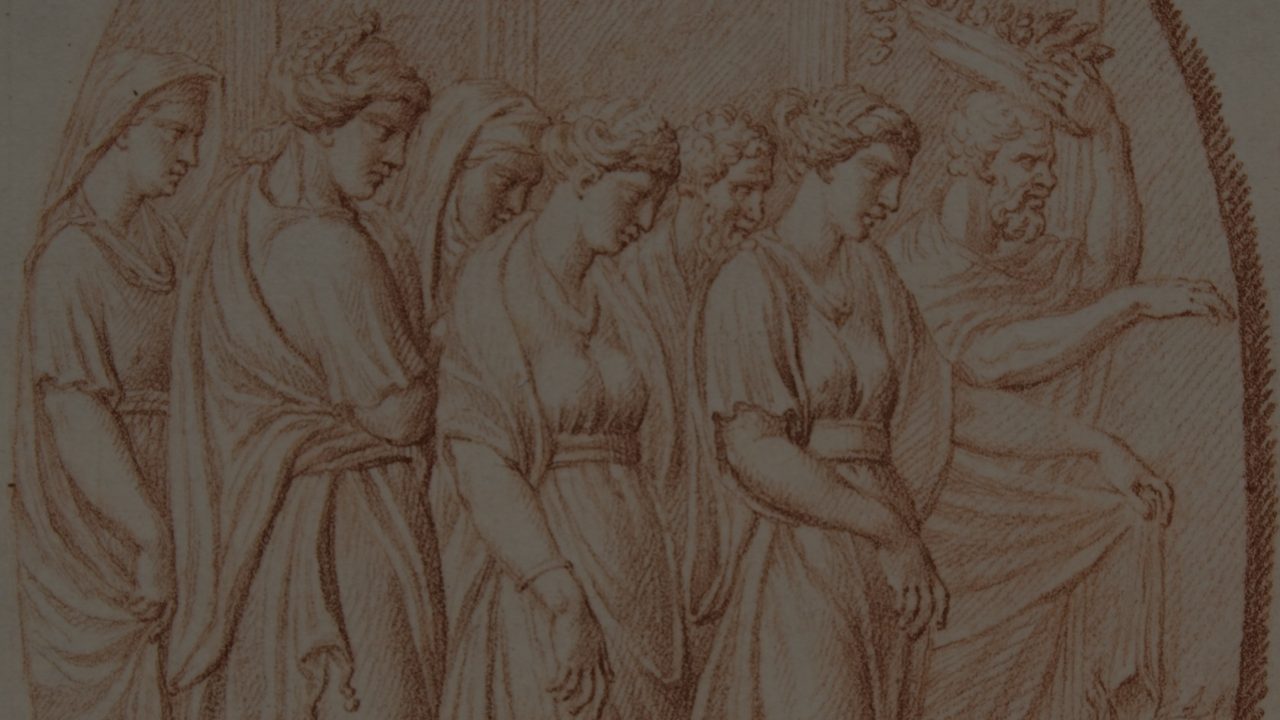
Serious comparison is older than any university department, but the modern field took shape in Europe between the 1700s and the early 1900s. In 1723 the Amsterdam publisher Jean Frédéric Bernard and the engraver Bernard Picart began issuing Religious Ceremonies of the World, a set of illustrated volumes that placed the rituals of Jews, Catholics, Protestants, Muslims, and peoples of Asia, Africa, and the Americas side by side. Historians argue that this one work taught many European readers to see their own faith as one religion among many (Hunt, Jacob, & Mijnhardt, 2010). The drawing at the top of this page is by Picart.
In the 1870s the German-born Oxford scholar Friedrich Max Müller called for a "science of religion" that would compare traditions the way linguists compare languages. His slogan, adapted from the poet Goethe, was that a person who knows only one religion knows none (Müller, 1873). Figure 1.1 shows the books that shaped the field from Picart to the present. The rest of this lesson walks through the ideas behind them.
The problem of definition
If almost everyone thinks they know what religion is, why can scholars not agree on a definition?
Because every definition draws a border, and every border either leaves out something that seems religious or lets in something that does not. Scholars sort definitions into two families. A says what religion is about, such as gods or spirits. A says what religion does, such as binding a group together or giving life an order (Schilbrack, 2022).
The anthropologist Edward Burnett Tylor offered the classic substantive definition. As a "minimum definition," he proposed "the belief in Spiritual Beings" (Tylor, 1871). Tylor chose a broad definition on purpose: he wanted the practices of peoples whom Victorian Europeans dismissed as primitive to count as religion on the same scale as the religions of his readers. He also gave the word its modern meaning, belief in souls and spirits, which Lesson 2 examines.
The French sociologist Emile Durkheim, whom SOC 101 Lesson 1 introduces as a founder of sociology, offered the classic functional definition:
"A religion is a unified system of beliefs and practices relative to sacred things, that is to say, things set apart and forbidden—beliefs and practices which unite into one single moral community called a Church, all those who adhere to them." Durkheim, The Elementary Forms of Religious Life (Fields translation), p. 44
For Durkheim the key is the line between the , things set apart and protected by rules, and the , ordinary things. He used "Church" for any such community, not only a Christian one. The American anthropologist Clifford Geertz later defined religion as "a system of symbols" that shapes people's moods and motivations by presenting a picture of the general order of existence so convincingly that it seems uniquely real (Geertz, 1973). Figure 1.2 compares the three.
| Definition | Focus | Strength | Common objection |
|---|---|---|---|
| Tylor (1871): belief in spiritual beings | What religion is about (substantive) | Clear and easy to apply across cultures | Puts belief first; may fit poorly with traditions that stress practice over belief |
| Durkheim (1912): beliefs and practices about sacred things that unite a moral community | What religion does (functional) | Captures ritual, belonging, and the sacred | May let in nationalism or sports fandom, whose flags and anthems can feel sacred |
| Geertz (1973): a system of symbols that makes a picture of reality feel uniquely real | Meaning and symbols | Shows how religion shapes moods and choices | Talal Asad (1993) argued it treats religion as private meaning and ignores power and discipline |
The experience of the holy
Is there something people feel in every religion that a definition by belief or function misses?
Some of the field's founders thought so. The American psychologist and philosopher William James studied religion from the inside, through the first-person reports of believers. For his Gifford Lectures he defined religion as:
"the feelings, acts, and experiences of individual men in their solitude, so far as they apprehend themselves to stand in relation to whatever they may consider the divine." William James, The Varieties of Religious Experience, Lecture II (1902)
The German theologian Rudolf Otto went further. In The Idea of the Holy he argued that the core of religion is an experience that reason alone cannot capture, which he called the . He described it with a Latin phrase, mysterium tremendum et fascinans: a mystery that makes a person tremble and, at the same moment, draws that person in (Otto, 1923). The Romanian-born historian of religions Mircea Eliade built on that idea. In The Sacred and the Profane he called any appearance of the sacred in the ordinary world a : a stone, a tree, or a mountain that, for a believer, becomes the place where another reality shows itself (Eliade, 1959).
These writers gave the field its interest in experience, and their work is still read. Their critics object that treating "the sacred" as one universal reality behind every religion is itself a religious claim, and a neutral scholar cannot simply assume it (McCutcheon, 1997). That criticism leads to the next tool.
A family of features
What if religion has no single essence at all?
The philosopher Ludwig Wittgenstein argued that some words, his example was "game," name a set of things that share no one common feature but instead overlap like the faces in a family: one member has the family nose, another the family eyes. He called this a (Wittgenstein, 1953, sections 66 and 67). Many scholars now treat religion the same way. A definition of this kind lists typical features and counts a tradition as religious when it has enough of them, without requiring any single feature (Schilbrack, 2022).
The best-known list comes from the British scholar Ninian Smart, who founded one of the first departments of religious studies in Britain. Smart described seven of religion, shown in Figure 1.3 (Smart, 1996). A tradition can be strong in one dimension and light in another. An unprogrammed Quaker meeting, which gathers in silence without clergy or a set liturgy, is light on formal ritual and strong in the ethical dimension; a village festival in India may be rich in ritual and material culture while saying little about doctrine. The dimensions give you a checklist for describing any tradition, including ones that do not call themselves religions.
Is "religion" our word?
If many languages had no word for "religion," are scholars studying something real or something they invented?
This is one of the liveliest debates in the field. The Canadian scholar Wilfred Cantwell Smith pointed out that the idea of "religions" as separate, bounded systems with names, such as "Hinduism," is largely a modern Western development; he proposed speaking instead of a person's faith and the cumulative tradition they inherit (W. C. Smith, 1962). The historian Brent Nongbri has argued that ancient peoples did not divide life into a religious part and a secular part the way modern Westerners do (Nongbri, 2013).
The American historian of religions Jonathan Z. Smith put the point most sharply in the preface to Imagining Religion:
"Religion is solely the creation of the scholar's study." J. Z. Smith, Imagining Religion (1982), p. xi
That line is often misread as saying religion is fake. Smith's point is narrower. Human beings around the world really do pray, sacrifice, tell sacred stories, and honor the dead. "Religion" is the scholar's second-order category for grouping those facts so they can be compared, and like any map it must be tested against the territory and corrected when it distorts (Schilbrack, 2022). A good scholar keeps both in view: the people being studied, in their own words, and the category used to compare them.
Insiders and outsiders
Who understands a religion better: the person who practices it or the scholar who studies it from outside?
Each sees something the other can miss. The linguist Kenneth Pike coined two terms for the two views (Pike, 1967). An account describes a practice in the insiders' own categories and words: what it means to them. An account describes it in the observer's categories, built for comparing many cultures. Pike took the terms from "phonemic," the sounds speakers of one language treat as different, and "phonetic," the sounds as a trained linguist measures them.
The tension between the two views is called the (McCutcheon, 1999). Insiders may know their tradition's meaning from the inside but take its history for granted. Outsiders may see patterns across cultures but miss what the practice actually means to the people who perform it. Max Weber, the other founder introduced in SOC 101 Lesson 1, made a related demand on social science: understand what an action means to the person doing it, which he called Verstehen. Figure 1.4 applies both views to one practice.
Bracketing the truth question
Can someone study a religion fairly without first deciding whether it is true?
Yes, and the field has a name for the stance. In 1967 the sociologist Peter Berger proposed : for the purposes of research, treat religion as a human product, explained by human causes, whatever one believes privately (Berger, 1967). Ninian Smart objected that this stance quietly takes a side, because it assumes the sacred is not really there. He proposed instead: for the purposes of research, neither affirm nor deny the existence of what believers worship, and describe what is real for them in their own world (Smart, 1973). Figure 1.5 compares the stances.
Methodological agnosticism grew out of the , an approach that describes religious phenomena as they appear to the people who experience them. Phenomenologists such as the Dutch scholar Gerardus van der Leeuw borrowed from the philosopher Edmund Husserl the idea of (from Greek, "holding back"): suspending one's own judgments long enough to see the phenomenon clearly (van der Leeuw, 1938). Later scholars added that no one fully escapes their own standpoint, so a careful scholar states that standpoint openly and then holds it back (Flood, 1999).
Methodological agnosticism is not the same as personal agnosticism. A devout believer and a convinced atheist can both use it, in the same way that a judge can set aside her own opinion of a defendant while weighing the evidence. What it rules out is letting a private verdict decide in advance how a tradition gets described.
The "world religions" list
Why do textbooks list the same handful of "world religions," and what does that list leave out?
Many introductory courses are organized around a short list: Hinduism, Buddhism, Judaism, Christianity, Islam, and sometimes a few more. Scholars call this the . The historian Tomoko Masuzawa traced how European scholars assembled the list in the 1800s and early 1900s (Masuzawa, 2005). Critics add that the list tends to model every tradition on a Protestant pattern: a founder, a sacred book, a creed, and a membership (Cotter & Robertson, 2016). Traditions that did not fit that pattern, such as Indigenous religions, folk practice, and the mixed practice common in China and Japan, were pushed to the margins or labeled "primitive."
Scholars do not respond by abandoning the big traditions, which really are large and historically connected. They respond by studying religion as people actually live it, which is often more local, more mixed, and more about practice than the textbook summaries suggest (Cotter & Robertson, 2016). This course follows that advice. It spends whole lessons on spirits and ancestors, on ancient polytheism, and on Chinese and Japanese practice, and it treats each tradition through all seven of Smart's dimensions instead of only through its official teachings.
Skills to keep
What will you do differently in every lesson after this one?
Four habits carry through the rest of the course:
- Pass the recognition test. Describe a tradition so that its own members would recognize it before you analyze it.
- Name your definition. When you call something religious, say which definition you are using and what it leaves out.
- Check all seven dimensions. Do not reduce a tradition to its official teachings; ask about ritual, story, experience, community, ethics, and material life too.
- Bracket, then judge. Hold back your own verdict while you describe. Questions of truth come afterward, in the right place.
Try it: ten minutes
Pick one practice you know well, your own or a neighbor's: a holiday meal, a funeral, a pilgrimage, a moment of silence at a game. Write two short paragraphs. In the first, describe it emically, in the words a participant would use. In the second, describe it etically, using at least three of Smart's seven dimensions. Then ask: would a participant accept the first paragraph? What does the second one notice that the first one does not?
Check yourself
Check yourself
How does religious studies differ from theology and from the philosophy of religion?
Theology reasons from inside a tradition about what is true for believers. The philosophy of religion tests arguments for and against religious claims. Religious studies describes, compares, and explains religions without ruling on which is true.
What is the difference between a substantive and a functional definition of religion? Give one example of each.
A substantive definition says what religion is about (Tylor: belief in spiritual beings). A functional definition says what religion does (Durkheim: beliefs and practices about sacred things that unite a moral community).
What did Durkheim mean by the sacred and the profane?
The sacred is what a community sets apart and protects with rules; the profane is the ordinary world. Religion, for Durkheim, organizes a community around that line.
What did Rudolf Otto mean by the numinous?
An experience at the core of religion that reason cannot fully capture: a mystery that makes a person tremble and at the same time draws that person in (mysterium tremendum et fascinans).
Why do many scholars prefer a family-resemblance approach to defining religion?
Because no single feature appears in everything we call religion. A family-resemblance approach lists typical features, such as Smart's seven dimensions, and counts a tradition as religious when it has enough of them.
Name Ninian Smart's seven dimensions of religion.
Ritual; narrative and mythic; experiential and emotional; social and institutional; ethical and legal; doctrinal and philosophical; material.
What is the difference between an emic and an etic account?
An emic account uses the insiders' own categories and words. An etic account uses the observer's categories, built for comparing cultures. Good scholarship needs both.
What is methodological agnosticism, and how does it differ from methodological atheism?
Methodological agnosticism (Smart) sets aside the truth question and neither affirms nor denies what believers worship. Methodological atheism (Berger) explains religion as if its sacred objects were human products, which critics say takes a side in advance.
What is the main criticism of the "world religions paradigm"?
The list was assembled by European scholars and tends to follow a Protestant model (founder, book, creed, membership), so traditions that did not fit, such as Indigenous and folk religions, were pushed to the margins.
Check yourself with a quick quiz
A few questions on this lesson only. Questions you miss come back later. Progress stays in this browser and is shared with the full quiz.
Top image: Bernard Picart, Figures before an Altar, red chalk drawing, The Metropolitan Museum of Art. Public domain.
References
- Asad, T. (1993). Genealogies of religion: Discipline and reasons of power in Christianity and Islam. Johns Hopkins University Press. Chapter 1.
- Berger, P. L. (1967). The sacred canopy: Elements of a sociological theory of religion. Doubleday.
- Cotter, C. R., & Robertson, D. G. (Eds.). (2016). After world religions: Reconstructing religious studies. Routledge.
- Durkheim, E. (1995). The elementary forms of religious life (K. E. Fields, Trans.). Free Press. (Original work published 1912)
- Eliade, M. (1959). The sacred and the profane: The nature of religion (W. R. Trask, Trans.). Harcourt, Brace. (Original work published 1957)
- Flood, G. (1999). Beyond phenomenology: Rethinking the study of religion. Cassell.
- Geertz, C. (1973). Religion as a cultural system. In The interpretation of cultures (chapter 4). Basic Books.
- Hunt, L., Jacob, M. C., & Mijnhardt, W. (2010). The book that changed Europe: Picart and Bernard's Religious Ceremonies of the World. Belknap Press of Harvard University Press.
- James, W. (1902). The varieties of religious experience: A study in human nature. Longmans, Green. Project Gutenberg. https://www.gutenberg.org/ebooks/621
- Masuzawa, T. (2005). The invention of world religions: Or, how European universalism was preserved in the language of pluralism. University of Chicago Press.
- McCutcheon, R. T. (1997). Manufacturing religion: The discourse on sui generis religion and the politics of nostalgia. Oxford University Press.
- McCutcheon, R. T. (Ed.). (1999). The insider/outsider problem in the study of religion: A reader. Cassell.
- Müller, F. M. (1873). Introduction to the science of religion. Longmans, Green.
- Nongbri, B. (2013). Before religion: A history of a modern concept. Yale University Press.
- Otto, R. (1923). The idea of the holy (J. W. Harvey, Trans.). Oxford University Press. (Original work published 1917)
- Picart, B. (n.d.). Figures before an altar [Red chalk drawing]. The Metropolitan Museum of Art, New York (Rogers Fund, 1967, 67.100.3). Public domain. Page image cropped and darkened. https://www.metmuseum.org/art/collection/search/339332
- Pike, K. L. (1967). Language in relation to a unified theory of the structure of human behavior (2nd ed.). Mouton.
- Reader, I., & Tanabe, G. J., Jr. (1998). Practically religious: Worldly benefits and the common religion of Japan. University of Hawai'i Press.
- Schilbrack, K. (2022). The concept of religion. In E. N. Zalta & U. Nodelman (Eds.), The Stanford encyclopedia of philosophy. https://plato.stanford.edu/entries/concept-religion/
- Smart, N. (1973). The science of religion and the sociology of knowledge: Some methodological questions. Princeton University Press.
- Smart, N. (1996). Dimensions of the sacred: An anatomy of the world's beliefs. University of California Press.
- Smith, J. Z. (1982). Imagining religion: From Babylon to Jonestown. University of Chicago Press.
- Smith, W. C. (1962). The meaning and end of religion. Macmillan.
- Tylor, E. B. (1871). Primitive culture (2 vols.). John Murray.
- van der Leeuw, G. (1938). Religion in essence and manifestation (J. E. Turner, Trans.). George Allen & Unwin. (Original work published 1933)
- Wittgenstein, L. (1953). Philosophical investigations (G. E. M. Anscombe, Trans.). Blackwell.
Further reading: OpenStax, Introduction to Sociology 3e, chapter 15, "Religion," free online: https://openstax.org/books/introduction-sociology-3e/pages/15-introduction
Image and media credits
- Top image. Bernard Picart (1673-1733), Figures before an Altar, red chalk drawing, cropped and darkened. Picart engraved the plates for Religious Ceremonies of the World (1723 onward), one of the first books to compare many religions side by side. Source: The Metropolitan Museum of Art, accession 67.100.3 (museum page). License: Public domain (the Met lists it as Open Access, CC0).
- Read-aloud audio. Narration of this page. It lets you listen to the lesson instead of reading it. Source: Created for this site: this page's text read by a computer-generated voice (Microsoft text-to-speech, Andrew voice). License: Our own text; the synthetic voice is Microsoft's.
- Diagrams and interactive figures. Every diagram and interactive figure on this page. They show the ideas in the text step by step. Source: Created for this site. License: Original to mattgaugerx.com.
